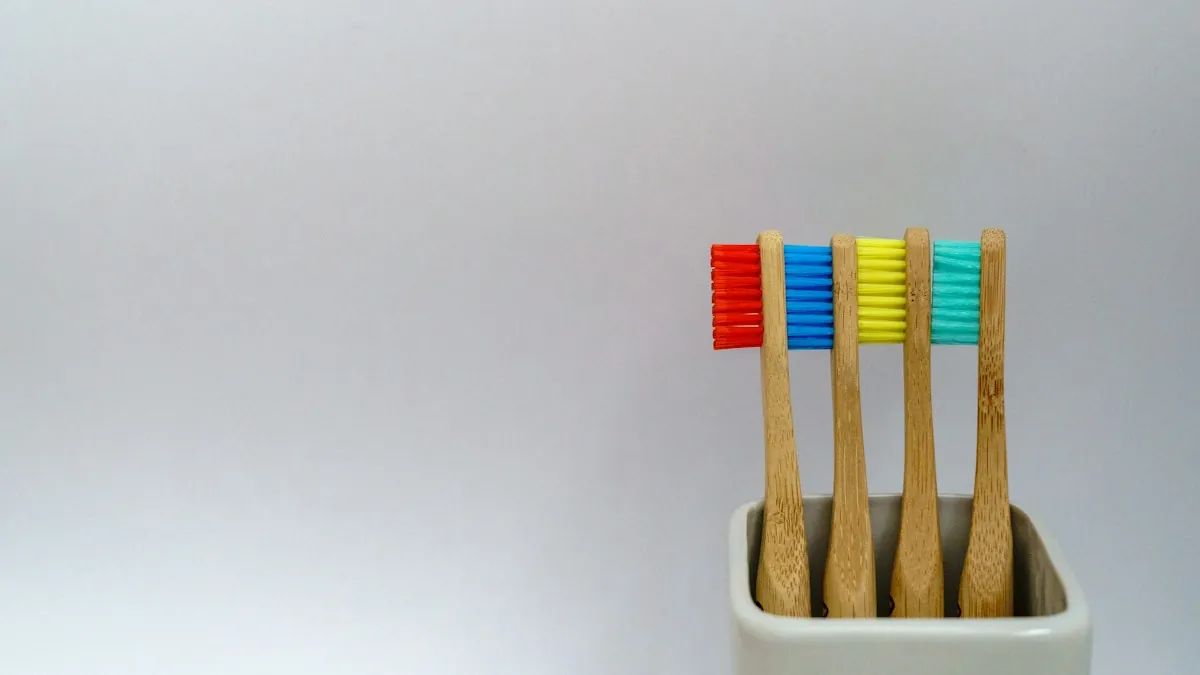
Brushing your teeth is something everyone does every day, yet poor or incorrect brushing is still one of the most common issues we see at check-ups. The good news is that fixing your technique usually takes just a few days of attention.
How long and how often?
The general recommendation is to brush at least twice a day for about two minutes. Brushing before bed is especially important: saliva flow drops during sleep, so plaque stays in contact with your teeth for longer.
The right technique
- Place the brush at roughly a 45-degree angle to the gum line.
- Use small circular or vibrating movements rather than hard back-and-forth scrubbing.
- Work around the outer, inner and chewing surfaces in turn, giving each area equal time.
- For the inner surfaces of the front teeth, hold the brush upright and use up-and-down strokes.
- Finish by gently brushing your tongue or using a tongue cleaner.
Common mistakes
Pressing too hard. Brushing harder does not mean cleaner. Too much force can contribute to gum recession and wear at the neck of the tooth. A soft or medium brush is enough for most people.
Keeping your brush too long. A brush with splayed bristles cannot remove plaque effectively. Replace it roughly every three months, or sooner if the bristles are worn.
Skipping between the teeth. A toothbrush cannot reach the surfaces where teeth touch. Use floss or interdental brushes once a day. If the gaps between your teeth are wider, your dentist can show you the right interdental brush size.
Brushing straight after acidic food or drink. After fruit juice, fizzy drinks or citrus fruit, enamel is temporarily softened. In these cases it is better to rinse with water and wait a while before brushing.
Electric or manual?
Both can be effective when used with the right technique. Electric brushes can make things easier for people with limited dexterity, those wearing braces, and anyone who finds it hard to keep track of time. What matters most is reaching every area with whichever brush you choose.
When to see a dentist
If you notice regular bleeding when brushing, persistent bad breath or sensitivity to hot and cold, mention it at your next check-up. These signs can often be managed with simple measures when caught early.
Don't hesitate to show your dentist how you brush during your visit. A quick hands-on demonstration is the most practical way to improve your routine.